Download The Athletic Brain: How Neuroscience is Revolutionising Sport and Can Help You Perform Better - Amit Katwala | ePub
Related searches:
Music and Neuroscience HowStuffWorks
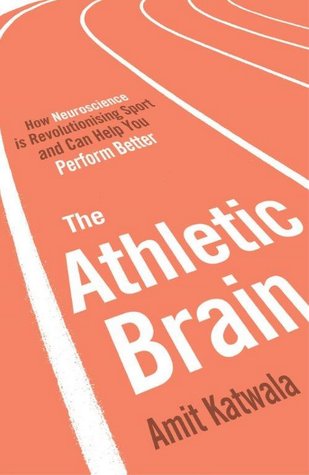
The Athletic Brain: How Neuroscience is Revolutionising Sport and Can Help You Perform Better
Neuroscience is changing baseball and could change sports
Mind Games: Exploring and Analyzing the Mind of an Athlete The
Imagery and Visualization: Strength and Conditioning for the Athletic
The Neuroscience of Finger Length Ratio and Athletic Prowess
How Jocks and Mathletes Are Alike - Issue 18: Genius - Nautilus
Collegiate athlete brain data for white matter mapping and network
The Mind of and Athlete – On Psychology and Neuroscience
Optimism and Anxiety Change the Structure of Your Brain
MIT Summer Research Program in Biology and Brain and
Brain and Neuroscience Advances - All Articles
Professional Golfers and Neuroscience - Better Brain & Body
Booktopia has the athletic brain, how neuroscience is revolutionising sport by amit katwala. Buy a discounted paperback of the athletic brain online from australia's leading online bookstore.
In a way the same technology that has caused our “brain problems” has also brought complex diagnostic and therapeutic tools for brain health at the consumer level. I believe the future of neurosurgery will be transformative and through innovative neuroscientific research into the realm of cognitive immersion, we will overcome the societal.
Adhd brains have low levels of a neurotransmitter called norepinephrine. Dopamine is the thing that helps control the brain’s reward and pleasure center. The adhd brain has impaired activity in four functional regions of the brain.
It is only a matter of time before brain the athletic brain is used in international sports globally. The athletic brain – how neuroscience is revolutionising sport and can help you perform better.
The athletic brain: how neuroscience is revolutionising sport and can help you perform better. The minds of elite athletes can pull off feats of anticipation and co-ordination that amateurs would find impossible. The athletic brain has been trained through hours and hours of practice - years of sweat and toil.
One of the most spectacular examples of the athletic brain operating at top speed came in 2001, when the yankees were in an american league playoff game with the oakland athletics. Shortstop derek jeter managed to grab an errant throw coming in from right field and then gently tossed the ball to catcher jorge posada, who tagged the base runner.
Soma npt (neuro performance technology) is a training app designed to train the brain of an athlete or high performing individual.
357 pages� illustrations� 24 cm text still image unmediated volume cristiano ronaldo and the art of anticipation -- mika hakkinen and the illusion of choice -- roger federer and the changing brain -- breaking the 10,000-hour rule -- unlocking the brain's hidden power -- luis suarez and the amygdal.
Growing evidence suggests that the neuroprotective benefits of moderate-to- vigorous aerobic exercise may be linked to increasing cerebral blood flow to the brain.
Apr 18, 2018 the performance cortex examines the intersection of neuroscience and sports, focusing on the complex interplay between an athlete's brain.
“zach schonbrun’s the performance cortex is full of insight into the next wave of athletic training, the relationship between the mind and the body, and the cutting-edge neuroscience that seeks to explore and exploit this interaction to create better athletes.
The fundamental lesson of neuroscience is that the brain is a biological organ embedded in a continuum of internal and external stimuli.
Renee is an associate professor of neuroscience at the university of rochester. She has been an avid fantasy sports player and analyst for many years, writing for numerous platforms.
When the brain's primary learning center is damaged, complex new neural circuits arise to compensate for the lost function, say life scientists from ucla and australia who have pinpointed the regions of the brain involved in creating those alternate pathways — often far from the damaged site.
Lastly, the brains of these athletes showed decreased activation of the lateral prefrontal cortex.
A healthy brain not only supports your intelligence, but emotional regulation, stress level, and other things that support your professional success.
The athletic brain has been trained through hours and hours of practice – years of sweat and toil. But what if there were a shortcut to training your brain? cognitive training tools offer the tantalising possibility of breaking the ‘10,000-hour rule’.
While sprinting suicides every day will definitely increase speed through muscle building, training the brain is equally as important as training the body when it comes to quick, explosive movements. That’s why halo neuroscience gives athletes a workout for both the brain and the body.
Amit katwala's book, the athletic brain, examines how neuroscience is revolutionizing sport and can help you perform better.
Their passion for sports and healthcare along with deep knowledge of neurological systems influenced their research into the brain and technologies that could interface to improve performance in the day to day lives of its users. Working from a simple prototype, they were able to build out the foundation for what would later evolve into cutting edge technology for neurological assessment and training.
Royer’s work continues in client’s homes across the globe and in university, athletic and business settings through royer neuroscience. For 25 years he has been working tirelessly to improve the brains of his clients and impact their quality of life.
Renee is an associate professor of neuroscience at the university of rochester. Her book, cognitive bias in fantasy sports: is your brain sabotaging your.
Neuroscientists have only recently begun to explore the neurological components that contribute to exceptional athletic performance; through studying the individual cognitive processes that underlie the elementary actions within sports games, scientists are able to further analyze the brain regions associated with particular athletic abilities.
Dec 14, 2020 our datasets address this challenge by providing magnetic resonance imaging data from 33 athletes and 9 matched controls.
The athletic brain – how neuronal signals influence sports performance about two months ago, on august 13 th� top class swimmer michael phelps won his 23 rd olympic gold medal overall in the men’s 4 x 100 m medley relay in rio de janeiro.
There is, however, a non-pharmacological way to trigger production of serotonin. Research has shown that physical activity can increase brain serotonin levels. For example, a research paper published in the journal of psychiatry and neuroscience included exercise among the several possible approaches to boosting serotonin levels in the brain.
Here are seven areas of the brain that enable seven different athletes to pull off in neuroscience labs, volunteers also play games where they try to outsmart.
Music and neuroscience - music and neuroscience are directly related when it comes to understanding happiness. Advertisement music activates so many parts of our brain that it's impo.
Because sport neuroscience is a relatively new field, a characterization of cognitive performances and their neural bases in athletes can be considered still in its infancy. Nonetheless, what is required to be successful at the highest level in sport is intuitively a multifaceted set of cognitive abilities.
The incredible science of how even a little meditation significantly alters your brain. Early rate through december 4 unless you've been living in a cave the last few years, someone has no doubt recom.
Jon wertheim, executive editor of sports illustrated and coauthor of this is your brain on sports and scorecasting “zach schonbrun’s the performance cortex is full of insight into the next wave of athletic training, the relationship between the mind and the body, and the cutting-edge neuroscience that seeks to explore and exploit this.
In mid-may, new york times contributing writer zach schonbrun released a book called the performance cortex: how neuroscience is redefining athletic genius.
The discipline of neuroscience has been a quickly rising field in the natural sciences. In 1969, the society for neuroscience boasted a mere 400 members. Compared to other areas within the natural sciences, neuroscience is still in its relative infancy.
Cognitive psychology for many years1, this research has nature reviews neuroscience and novice athletes use their brains differently, but pre-.
The company is also kicking off new studies with a few organizations to further unpack how brain stimulation improves athletic performance and accelerates skill development in music and esports.
A groundbreaking new perspective on the science of elite sporting performance.
The athletic brain has been trained through hours and hours of practice - years of sweat and toil. But what if there were a shortcut to training your brain? cognitive training tools offer the tantalising possibility of breaking the '10,000-hour rule'.
Apr 21, 2016 most people don't think the brain has to do with strength and performance, but one company claims their headset can increase athletic ability.
Sep 8, 2016 author amit katwala delves into how neuroscience is revolutionising sport and can help athletes increase performance.
Athletic training is more complex, involving more muscles and many brain regions, she says. Chao says the results from halo’s work with elite athletes suggests otherwise.
Aug 5, 2016 this is called neural plasticity – it means our brains are malleable, like plasticine. The brain is made up of billions of individual neurons that 'fire'.
The “brain” of a personal computer, in which all data flows with commands and instructions, is the central processing unit of the computer. Known as the cpu, this important component of the computer hardware facilitates instructions between.
Recent neuroscience research into the biology of pain suggests that clinicians involved in the management of athletes with lbp should embrace a biopsychosocial approach by engaging the brain and nervous system.
Apr 18, 2016 halo sport has big potential on the playing field—and in the exam room. To stimulate the brain, which has been referred to as “neuro-doping.
Neuroscience is one of the most intellectually challenging and rewarding areas of modern science, but even for basic research scientists, neuroscience research also offers the opportunity to relieve human disability and suffering.
I'm chief technical officer and co-founder of halo neuroscience.
Summary of episode: 2:30 – zach’s background in sports and business journalism 5:25 – zach’s book the performance cortex: how the brain impacts performance in baseball 10:55 – the biggest surprises in touring neuroscience labs around the country 15:55 – when to swing; when not to swing.
Here is a quick description and cover image of book the athletic brain: how neuroscience is revolutionising sport and can help you perform better written by amit katwala which was published in 2016-8-11. You can read this before the athletic brain: how neuroscience is revolutionising sport and can help you perform better pdf epub full download at the bottom.
Computational neuroscience is the theoretical study of the brain used to uncover the principles and mechanisms that guide the development, organization, information-processing and mental abilities of the nervous system. Many computational models have attempted to quantify the process of how various rhythms are created by humans.
Three fantastical tales of where neuroscience might take us are based on the progress made by brain researchers in the last 100 years.
The main areas of the brain include the cerebrum, cerebellum, forebrain, and brain stem. The cerebrum is divided into 2 halves that have 4 parts, called lobes.
Integrated neuroscience services is the only company founded and operated by two clinical neuropsychologists. Robert coben and anne stevens provide neurofeedback services daily, and have directly helped over 20,000 of their own patients in a combined 37 years of clinical practice.
Neurobiology differs from neuroscience, a much broader field that is concerned with any scientific study of the nervous system.
The neuroscience of finger length ratio and athletic prowess there may be a link between finger length ratios, testosterone, and athleticism.
Tartar about the need for sports neuroscience, and how psychology or physical therapy who are looking at brain-exercise relationships. Athletes spend a lot of time training for performance and eati.
Neuroscience is a rich field devoted to studying the many facets of the nervous system. The nervous system includes both the central nervous system, consisting of a brain and spinal cord, and the peripheral nervous system comprised of the nerves that lie in the extremities, muscles, and organs.
We also develop products to train the athletic brain and accelerate the curve of latest neuroscience research of how athletes use their brain for playing sports.
As sports fans, we marvel at elite athletes and the way they play their sport. The physical prowess is clearly seen, but the little-researched yet powerful brain.
Optimism and anxiety change the structure of your brain cognitive and affective neuroscience. This is one way that your daily athletic process can literally reshape and rewire your brain.
Stern, phd, a professor of neurology and neurosurgery at boston university school of medicine. “however, the overall number of cases in the study is still small.
The brain is made up of more than just nerve cells (neurons). Although there are about 86-100 billion neurons in the brain, there are about the same number of glial cells in the brain. But do you hear much about glia? no! because neurons get all the attention, you don't hear too much about glia.
The philosophy and science of motor learning has developed numerous theories over the past few decades about how effective motor performance is achieved,.
The brain training: training the athletic brain course gives coaches greater insight into how expert sporting skills actually develop over time. It brings together contemporary research from neuroscience, sports expertise development, skill acquisition and psychology.
The performance cortex: how neuroscience is redefining athletic genius. Have you ever watched an elite athlete and thought, “how do they do that?”. In the performance cortex, zach schonbrun explains how it’s not just the conditioning of the body, but also the brain, that makes it possible. He takes a look at the neuroscience of athletic prowess, in great athletes today and as a training tool to shape the next generation.
The friedman brain institute hosts a neuroscience retreat held in the spring of each year. Neuroscience is multidisciplinary by nature and, reflecting this, the scientists and physicians that contribute to the neurosciences at mount sinai hail from a variety of departments and campuses.
Daniel chao spoke to medgadget about the device and assured everyone that the brain stimulation, called transcranial direct current stimulation or tdcs, was 100 percent safe. He also explained that the science itself is backed by over 15 years of research.
So yea, you know how the left brain is really realistic, analytical, practical, organized, and logical, and the right brain is so darn creative, passionate.
Jan 10, 2014 does practice really make perfect — or is it all in our head? learn how new technologies are building a better athlete, one brain at a time.
The department of brain and cognitive sciences offers jointly with the center for brains, minds, and machines and the department of biology, a 10-week summer research-intensive training program (msrp-bio) in all fields of neuroscience to advanced sophomore and junior science majors from other colleges and universities.
Citation: quarta e, cohen ej, bravi r and minciacchi d (2020) future portrait of the athletic brain: mechanistic understanding of human sport performance via animal neurophysiology of motor behavior. Received: 18 august 2020; accepted: 19 october 2020; published: 17 november 2020.
Com: the performance cortex: how neuroscience is redefining athletic genius (9781101986332) by schonbrun, zach and a great selection of similar new, used and collectible books available now at great prices.
Through neuroscience research, scientists are gaining a better understanding of how alcohol changes the brain and how those changes in turn influence certain behaviors. To function normally, the brain must maintain a careful balance of chemicals called neurotransmitters—small molecules involved in the brain’s communication system that.
Ironically, this is happening just when neuroscience research is revealing the impressive impact that the arts have on the young brain's cognitive, social and emotional development. Cognitive growth during the brain's early years, neural connections are being made at a rapid rate.
So how does the brain improve athletic performance? the brain provides what is known as neural drive to the body. This is the electrical signal sent from the brain to the muscular system, which activates muscle fibers that are responsible for generating power.
Halo is a headset worn with the intent to increase performance by priming the brain for activity. The headset is placed on the primary motor cortex: the area of the brain that initiates voluntary movement of muscles. It uses transcranial direct current stimulation (tdcs); a weak electrical current applied to the scalp that increases the excitability of the neurons in the primary motor cortex.
Reading, science shows, doesn't just fill your brain with information; it actually changes the way your brain works for the better as well.
The neuroscience of exercise is a growing research area that is dedicated to furthering our understanding of the effects that exercise has on mental health and athletic performance.
The brain is an amazing part of the athletic genius in greats like tom brady, michael jordan, or lionel messi. The book focuses in part on neuroscientists, jordan muraskin and jason she my appreciation of athletic genius has tripled, quadrupled, or more after reading the performance cortex: how neuroscience is redefining athletic genius�.
May 21, 2018 the idea is not new however brain training is still not being commonly used by athletes in the high-performance sport today.
Apr 30, 2018 the book -- which, as promised, provides an interesting, science-heavy look at the role the brain plays in athletics -- is available just about.
The challenge of pred icting the brain from a neuroscience perspective suggests a narrowing of the field of possibilities; how ever neuroscience is an extremely broad field in itself, collaborating.
Jan 28, 2020 today, halo neuroscience and professional athletes are using an innovatively designed tdcs device to improve their performance, muscular.
Scientific american is the essential guide to the most awe-inspiring advances in science and technology, explaining how they change our understanding of the world and shape our lives.
The brain is the next frontier in unlocking athletic potential, so this growing interest in the application of neuroscience to sport performance is exciting. While the science is still in its infancy and hasn’t unequivocally confirmed the benefit of wearable neurotech, some of these devices definitely hold promise.
What is neuroscience? neuroscience is the scientific study of nervous systems. Neuroscience can involve research from many branches of science including those involving neurology, brain science, neurobiology, psychology, computer science, artificial intelligence, statistics, prosthetics, neuroimaging, engineering, medicine, physics, mathematics.
Feb 11, 2016 if you're an athlete, it's a no-brainer (get it?) that the key to improving athletic performance is training.
Post Your Comments: