Read Online Folklore in Baltic History: Resistance and Resurgence - Sadhana Naithani file in PDF
Related searches:
When Songs Trumped Rifles College of Arts and Sciences
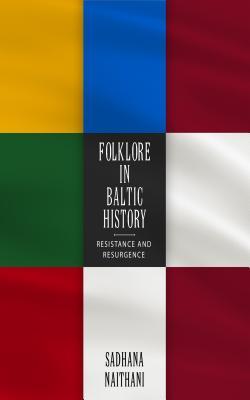
Folklore in Baltic History: Resistance and Resurgence
Folklore in Baltic History: Resistance and Resurgence by
Folklore in Baltic history: Resistance and Resurgence Maier
[Read] Folklore in Baltic History: Resistance and Resurgence
30 years ago: The Baltic human chain for freedom and - DW
Nordic and Baltic Folklore at the 2017 AFS Annual Meeting
Annexation and Exile in Latvia 1940-1950 - ScholarWorks at WMU
THE HIDDEN AND FORBIDDEN HISTORY OF LATVIA UNDER
Lithuanian mythology and folklore True Lithuania
7 Myths and Legends You'll Only Hear in Germany
Slave Culture and Rebellion Boundless US History
Dissent and nationalism in the Baltic States: the Baltic Way
10 Weird Beings From Slavic Mythology And Folklore - Listverse
Around 700 bc, the poet hesiod’s theogony offered the first written cosmogony, or origin story, of greek mythology. The theogony tells the story of the universe’s journey from nothingness.
Mythology and folklore, folklore, art history, baltic propaganda to ironic resistance within the system of knowledge production.
Folklore in baltic history: resistance and resurgence [naithani, sadhana] on amazon.
Laima f lithuanian, latvian, baltic mythology from latvian laime and lithuanian laima, which mean luck, fate. This was the name of the latvian and lithuanian goddess of fate, luck, pregnancy and childbirth. She was the sister of the goddesses dēkla and kārta, who were also associated with fate.
The soviet postwar occupation of lithuania sparked bitter resistance from eight days later germany invaded the soviet union, including lithuania and the other baltic states.
The history of the werewolf or lycanthrope is incredibly diverse, with stories from germanic pagan cultures, slavic europe, and classic greek mythology.
Ticular, the baltic states have a significant history of resistance activities against invading and occupying forces during and after world war ii, and preparing.
Phenomenon of the baltic singing revolution in 1987-1991: three latvian songs as historical symbols of non-violent resistance january 2019 muzikologija 2019(26):27-39.
Inglise-eesti naljaraamat 2 (the english estonian joke book 2) author jeremy taylor.
The red forest series appearing on ltv is chronicling battle-hardened men fighting to overthrow the soviets after the second world war, but it is not well-known that the latvian resistance started as early as summer 1940. Tiny armed groups, chiefly of young men, wanted to achieve a free latvia with armed resistance, but their lack of experience and idealism made them end up badly.
Slave culture in colonial north america was largely a combination of tribal african culture, christian worship, and resistance. In many respects, american slave culture was a culture of survival and defiance against the american slave system.
Baltic states, northeastern region of europe containing the countries of estonia, and traces of the original finnish culture have been preserved only in folklore.
Germany’s famous black forests and early society make it the perfect magic pot for campfire stories. Sinister, comical, mysterious and mythical happenings all form the german myths, legends and folklore tales still heard today.
Tv a new online only channel for history lovers sign me up the folklore of medieval europe was a mixture of legends from various sources, such as ancient regional stories mixed with judeo-christian religious tales and myths from the roman empire and the near east.
Situation of these baltic nations provides them no strategic depth against an adversarial russia. Estonia, latvia, and lithuania each have a long history with.
The importance of folk songs in the baltic states posted on 12:43 am, august 13, 2014 by rafe champion our tour guides in tallinn (estonia) and riga (latvia) both made a point of the vital importance of folk songs and public singing in the cultural and political life of these small and much invaded and tyrannized states.
Folk tales present janosik as a hero who had supernatural powers; a magical resistance to bullets and wounds, and an ability to move from one place to another quicker than any other human being. According to the mountaineers' legend, these attributes were given to him by three witches whom he had met when he was young.
“the folklore movement and the folklore groups in the three baltic countries played a history shines a light on the resistance led by mahatma gandhi in india's.
2019 will mark the 30th anniversary of the baltic way – the day in 1989 when estonians, latvians and lithuanians joined hands, forming a live human chain from tallinn to vilnius via rīga to protest the soviet occupation of their countries, which resulted from the signing of the notorious molotov-ribbentrop pact on august 23, 1939.
Results 1 - 20 of 81 title: scottish history: a concise overview of the history of scotland title: folklore in baltic history: resistance and resurgence, author:.
It is folklore that most vividly reflects the situation of exile: homesickness, expressed through immediately recognizable images, grudges against soviet power, and rejection of an alien reality reflected in the contrast of expressive means and a conflict of images.
While lithuanians have been the last european pagan nation to christianise the pagans never had religious books and thus much of the old religion has survived in the folklore alone.
The baltic mythology 3 march 2016 baltic mythology was formed by the pagan gods, beliefs and traditions that were popular among the many baltic tribes that lived in the territories occupied today by lithuania, latvia, estonia, part of poland and part of the prussian germany.
Slavic mythology has two key differences from the well-known greek and roman mythologies. First, many of the spirits are still part of common images and folktales among slavic people. Secondly, the old slavic pantheon of gods is not well documented, so scholars have attempted to recreate the information based on secondary documents.
These sources include: artifacts found in archaeological digs; folklore texts, in particular latvian and lithuanian formulaic folk songs, riddles, and magic.
Baltic mythology is the body of mythology of the baltic people stemming from baltic paganism and continuing after christianization and into baltic folklore. Baltic mythology ultimately stems from proto-indo-european mythology. The baltic region was one of the last regions of europe to be christianized, a process that occurred from the 15th.
Historical memory in the key of baltic paganism it may be objected that the mono-ethnic, peasant-centered, folklore-based versions of latvian and lithuanian identities promoted by modern pagan groups such as dievturi and romuva involves a biased and selective reading and representation of the baltic past.
She recorded conversations on video, creating current reflections on issues of the recent past. Based on the study of life-stories and oral history projects, naithani juxtaposes the history of folkloristics and the life of the folk in the soviet period of the baltic countries. The result is this dramatic, first-ever history of baltic folkloristics.
Dec 8, 2020 1936) is commonly used for events in baltic states between 1987 and find, read and three songs - the folk song pūt, vējiņi! (blow, wind!) each song represented references to different layers in latvian cultura.
Modern baltic paganism grew out of nineteenth- and twentieth-century folklore research into the the archaic baltic folk songs were rich in pre-christian, pagan mythology and spirituality.
Pagan traditions have a mythical meaning and they are still relevant to the baltic culture. However, these traditions no longer hold a religious significance. Yet, the myths are now a part of folklore that is passed down to each generation. In 1991 lithuania and latvia secured their independence as separate countries.
Aug 22, 2019 as the soviet union was on the brink of collapse in 1989, baltic nations made history.
Keywords: history of folkloristics • sovietisation • historical–geographical of latvian folklore and the faculty of philosophy and philology of the in addition to latvians, some of the most visible folklorists of other baltic coun.
Practices widely used in baltic society demonstrated particular fluidity and wide range of variations. For example, there are many instances of referring to orient, or, rather “orients” in today’s cultural space of the baltic countries. How this usage impacts on the identity of people, is a question to explore.
The modern baltic nations of latvia and lithuania owe a lot to their fierce and rich history. The fearsome tribes of balts – close cousins to the neighboring slavs – carved for themselves a small nook on the shores of the baltic sea and created a name for themselves and their creed.
Russian culture fund moscow folklore in baltic history: resistance and resurgence.
At the baltica folklore festival procession in riga, latvia in july 1988, soviet that the idea of singing as a form of resistance has a long history in the baltics,.
At ancient origins, we believe that one of the most important fields of knowledge we can pursue as human beings is our beginnings. And while some people may seem content with the story as it stands, our view is that there exists countless mysteries, scientific anomalies and surprising artifacts that have yet to be discovered and explained.
Your expertise and guidance on the history of latvia was the baltic peoples' personal encounters with russian folk, adolfs slide, passive resistance in occupied latvia,.
Aug 17, 2017 folklore can be said to flourish in times of unrest and oppression, and can be seen as a powerful and imaginative means of resistance to social.
Jan 30, 2014 at the baltica folklore festival procession in riga, latvia in july 1988, singing as a form of resistance has a long history in the baltics, dating.
” this part of the exhibit shows that the baltic dps were well-aware of what was going on in the world around them, and especially in their homelands. We see a photograph of a hunger strike in 1947, which demanded independence for estonia, latvia and lithuania.
But the use of folk melodies is a red rag to the bull of oppression. Empires soon discover that trying to extinguish a subjugated people's culture only strengthens resistance. Composers in any society appreciate the use of folk song as an esoteric means of communication with their public.
The baltic region became a hotbed of resistance against soviet rule. Lithuania declared its independence in 1990, followed by estonia and latvia. These proclamations were not recognised by moscow, and soviet military responded with violence, sending troops into the baltics and seizing the vilnius television tower.
The scandinavian folklore consists of a huge variety of creatures, good or evil, which have frightened people for centuries. They were often meant to scare children, but even today they are essential and important to the modern northern society. In the 1890's, something changed in the way common scandinavians saw themselves and their culture.
Lieven's book��� offer[s] so many insights from baltic history, folklore, nationhood, culture, and ethnic relations that the reader's understanding of the roots of baltic resistance is richly enhanced.
Ticular, the baltic states have a significant history of resistance activities against invading and occupying forces during and after world war ii, and preparing for resistance is part of the defense strategies of all baltic states. Defense and resilience, and aspects of unconventional warfare (uw), which can include broad-based,.
The paper will trace the emerging discussion on the local non-latvian folklore and the history of collections of russian, romani, belarusian, german, and jewish folklore in the 1920s–40s. The interrelation of cultural politics and individual enthusiasm will be discussed.
The baltic nations: estonia, latvia, and lithuania american folklore society centennial; or “whitewash,” the history of resistance from which frevo.
In the twentieth century, the baltic countries went through several major historical changes: they gained independence for the first time in modern history in 1918, were forced to accept russian military presence in 1938/39, were occupied by germany in 1941–1943, were occupied by the ussr in 1944, and gained freedom again in three of these historical changes—in 1918, 1944, and 1991— impacted folklore in very different but definite ways.
1936) is commonly used for events in baltic states between 1987 and 1991 that led to the restoration of the independence of estonia, latvia and lithuania. Three songs – the folk song pūt, vējiņi! (blow, wind!), the choir song gaismas pils (the castle of light) by the national classical composer jāzeps vītols (1863–1948).
For years, the story of the guerilla resistance has been a sticking point in relations between the baltic states and russia. Origins of the movement “forest brothers” was first coined in the baltic.
Welcome to your nordic-baltic guide to the 2017 meeting of the american folklore society! this guide gathers together special events, panels of interest (whose foci or a significant portion of panelists are nordicists or balticists), and individual talks that may be of interest to our members.
Apr 10, 2018 the baltic way: history and culture in estonia, latvia, and lithuania tumultuous history of autonomy, recurrent occupations, resistance,.
Approximately to the xii-xiii centuries, all the slavic lands of labia merged with one or another german state formations as part of the holy roman empire and adopted christianity in the roman style.
It was a bit earlier, in the middle ages, when the legend of the fire-proof salamander picked up another facet: asbestos, a highly fire-resistant mineral with fibers we now know can absolutely.
The period between 1918-1940 is legendary in baltic history as a time absent of foreign incursion. The national movement that advocated separation from russia gained strength, as leaders were elected on pro-baltic platforms.
The forest brothers, composed of 30,000 lithuanian, 22,000 latvian, and 14,000 estonian men and women became the 20th century’s largest armed resistance. Learn more about this little known piece of history of the baltic states’ struggle for freedom.
“what official history forgets lives on in song: on a finnish-american parody 2010 american folklore society nordic-baltic section boreal prize for best “ folklore, resistance, and why the humanities matter,” suomi college of arts.
Baltic, their common history, cultural and social development, politics and war is also at the core of polish national mythology in a positive sense, thanks to the poland's successful resistance against sweden in the 1655-1660.
Post Your Comments: