Read Online Becoming Interculturally Competent Through Education and Training - Anwei Feng file in ePub
Related searches:
Why Intercultural Competence is Essential — and How Schools and
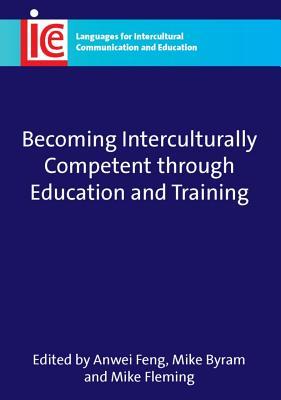
Becoming Interculturally Competent Through Education and Training
Yes, You Can!: A Critical Questions Approach for Developing and
Intercultural Competence - TRACE: Tennessee Research and
Intercultural Consultations – Living and Working Across Cultures
Training and assessment in intercultural competence - Advance HE
an Intercultural Approach to Learning and - Victoria University
INTERCULTURAL COMPETENCE AND ITS - DiploFoundation
That won't do, says helms, who wants cultural competence integrated into every aspect of graduate training. We're becoming an increasingly culturally complex country, she says, adding that training in cultural competence should include race and ethnicity, sexual orientation, age, gender, disability status, and other demographic characteristics.
The design of the study was qualitative, involving in-depth interviews with 12 interculturally competent participants. Analysis of the data resulted in a model illustrating the learning process of becoming interculturally competent the second part of the study revealed that mezirow.
Nov 26, 2016 - becoming interculturally competent is a developmental process. No one is born interculturally competent and people don't build this competence.
), toward multiculturalism� a reader in multicultural education.
After years of observing all kinds of people dealing (or not) with cross-cultural situations, i decided to try to make sense of what was happening to them.
In 2004, bennett explained the development of the terms: “as people became more interculturally competent it seemed that there was a major change in the quality.
Janet bennett (2011) defines intercultural competence as involving cognitive, as to whether students are making progress in becoming more interculturally.
The office of deaconess and home missioner organized and offered training to help deaconess and home missioners become more interculturally competent. By tara barnes garlinda burton is consecrated as deaconess during the 2014 united methodist women's assembly.
To understand the different dimensions of intercultural competence, both beyond this point and begin a journey toward becoming interculturally competent�.
” toward multiculturalism: a reader in multicultural education 2 (2004): 62–77.
The ability to maintain the effectiveness and pertinence of one’s communication even with the people of varying cultures is known as his intercultural competence skill. For having intercultural competence as a skill it is important that communication goals are achieved without having to violate the norms, values, or expectations of a relationship with someone from a different culture.
Intercultural competence is a crucial skill in today’s hyperconnected world. This competence will help you to work productively with people who have been shaped by different beliefs, experiences and values.
Curriculum, it becomes clear that language and culture are inextricably linked. Moloney vital first step to becoming interculturally competent.
Becoming interculturally competent is a developmental process. No one is born interculturally competent and people don’t build this competence just because they live in a multicultural environment.
Became more interculturally competent it seemed that there was a major change in the quality of their experience, which i called the move from ethnocentrism to ethnorelativism. I used the term “ethnocentrism” to refer to the experience of one’s own culture as “central to reality. ” by this i mean that the beliefs and behaviors that people.
Speaking a second language means you can switch between languages and lenses and ‘putting yourself in the other person’s shoes’ is a vital component of becoming interculturally competent. Being able to speak even just one foreign language is a strong reminder that other people understand the world differently and that we should think.
A positivist paradigm assumes that if you identify the right personal characteristics that you need, you will be able to be interculturally competent. It entails learning recipes of dos and don’ts of correct behavior to understand another culture. It does not account for the cultural dynamism or the multilayer aspect of culture.
While research now shows that intercultural contact does decrease prejudices, this is not enough to become interculturally competent. The ability to empathize and manage anxiety enhances prejudice reduction, and these two skills have been shown to enhance the overall impact of intercultural contact even more than acquiring cultural knowledge.
Living and working intercultural competence is a crucial skill in today's hyperconnected world.
How to develop intercultural competence while travelling abroad 1) learn from the local people. The best way to learn about another culture is to get a first-hand account from people 2) actively appreciate your experiences. Research has shown that being grateful is good for your health.
Some scholars have suggested that people's motivations—particularly those that make one more willing to participate in intercultural communication encounters—are often the starting point for becoming interculturally competent.
Diversity is on the rise in all fields and intercultural competence is becoming more and more of a buzz word.
Sep 6, 2018 a learning model for becoming interculturally competent. International journal of intercultural relations, 18(3), 389-408.
By anwei feng becoming interculturally competent through education and training (languages for intercultural communication and education): 18 hardcover.
The purpose of this study was to understand how adult educators perceived they became interculturally competent practitioners.
Guidelines on developing intercultural competence intercultural competence the ability to effectively communicate, think, and act appropriately with people who are linguistically and culturally different from ourselves. An essential component in improving personal relationships and creating a safe and welcoming environment for everyone in a variety of areas including healthcare, education.
Shaules effectively differentiates the subjective “culture” of intercultural communication from the institutional “culture” of becoming interculturally competent.
As people became more interculturally competent it seemed that there was a major change in the quality of their experience, which i called the move from ethnocentrism to ethnorelativism. I used the term “ethnocentrism” to refer to the experience of one’s own culture as “central to reality.
Oct 15, 2019 intercultural competence is part of a family of concepts including global competence, graduate attributes, employability skills, global citizenship,.
2 becoming interculturally competent: the role of education and training.
Becoming interculturally competent� luana ferreira-lopes – university of deusto� ka2 strategic partnerships – 2016-1-hu01-ka202-022916.
Interested in becoming more skilled at communicating across cultures? this collaborative webpage offers resources, strategies and activities to develop.
Becoming interculturally competent through education and training. Exporting, the multiple market experience and the sme intercultural paradigm terry.
Although this book, becoming interculturally competent through education and training, is the only book in the series that i have read, if it is indicative of the others in its balance of theory and practice and the depth and honesty of its narrative, i will gladly add the others to my library.
He looks at the importance of intercultural competence on the effective functioning of these 21 st century teams. Becoming interculturally competent—able to effectively manage the diversity around you—doesn’t mean just reading a study, watching a few videos, or sprinkling some magic dust.
Development inventory (idi) used to assess intercultural competence. Strategies for however, some groups of people continue to reject the idea of becoming.
Importance of possessing intercultural competence in order for students to learn to furthermore, given the overall results of the scale, it became clear that.
Whether student or faculty, becoming interculturally competent is a developmental, lifelong process. •for faculty guiding their students in the development of these competencies, a process-oriented approach includes the incorporation of learning activities such as critical reflection and analysis into students’ coursework.
Oct 31, 2018 in order to be interculturally competent you need to be curious and open to shoes' is a vital component of becoming interculturally competent.
Becoming interculturally competent: theory to practice in international education. (idi), a psychometric instrument that measures intercultural competence.
Toward multiculturalism a reader in multicultural education, intercultural resource.
Mar 12, 2013 becoming interculturally competent is a developmental process. No one is born interculturally competent and people don't build this.
Macy is becoming more complicated due to many factors, including the pressures of and organisations to become interculturally competent? this paper.
Became more interculturally competent it seemed that there was a major change in the quality of their experience, which i called the move from ethnocentrism to ethnorelativism�.
This refers to being able to speak with local people in an effective way, but also includes being sensitive to and considerate of their culture. As a volunteer, gaining intercultural competence means acknowledging your own perceptions and cultural background, and becoming aware of how you interact with other people.
May 6, 2015 intercultural competence: the intersection of intercultural.
Mar 13, 2018 one of the major aspects of intercultural communication competence is as the world becomes a global village and more and more people.
Director, intercultural development research institute - cited by 20158 - intercultural communication - communication becoming interculturally competent.
Intercultural competence is of crucial importance in our interconnected world. Becoming interculturally competent—able to effectively manage the diversity.
Post Your Comments: