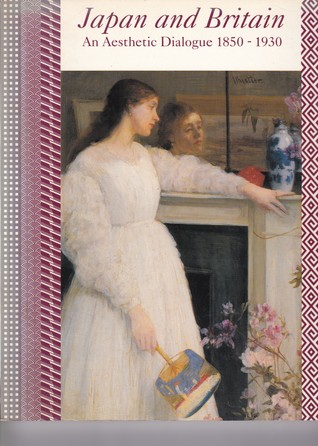
Exhibition catalogue.
| Title | : | Japan and Britain: An Aesthetic Dialogue, 1850-1930 |
| Author | : | Tomoko Sato |
| Language | : | en |
| Rating | : | |
| Type | : | PDF, ePub, Kindle |
| Uploaded | : | Apr 08, 2021 |
Exhibition catalogue.
| Title | : | Japan and Britain: An Aesthetic Dialogue, 1850-1930 |
| Author | : | Tomoko Sato |
| Language | : | en |
| Rating | : | 4.90 out of 5 stars |
| Type | : | PDF, ePub, Kindle |
| Uploaded | : | Apr 08, 2021 |
Download Japan and Britain: An Aesthetic Dialogue, 1850-1930 - Tomoko Sato file in PDF
Related searches:
Japan and Britain: An Aesthetic Dialogue 1850-1930 - Google Books
Japan and Britain: An Aesthetic Dialogue, 1850-1930
Japan and Britain : An Aesthetic Dialogue, 1850-1930 (1991
Aesthetic Movement - Buffalo Architecture and History
The Meiji Legacy: Gardens and Parks of Japan and Britain, 1850-1914
Quaint, Exquisite: Victorian Aesthetics and the Idea of Japan
Japan and Britain: An Aesthetic Dialogue 1850-1930: Tomoko
0853315965 - Japan and Britain: an Aesthetic Dialogue 1850
Japan and Britain Barbican
Japan and Britain: An Aesthetic Dialogue, 1850-1930: Amazon
From Fetish to Fashion: Japanese Style as Commodity in 19th and
Exploring Japanese Art and Aesthetic as inspiration for emotionally
The Role of Teacher Morale and Motivation on Students
Japan - Resources and power Britannica
(2005) emotionally durable design: objects, experiences and empathy.
The aesthetic movement in britain (1860 – 1900) aimed to produce art that was greek sculpture and art forms of the orient, especially japanese prints.
1991, japan and britain: an aesthetic dialogue 1850- 1930, london: lund.
The development of western aesthetics the contributions of the ancient greeks. The two greatest greek philosophers, plato and aristotle, shared a sense of the importance of aesthetics, and both regarded music, poetry, architecture, and drama as fundamental institutions within the body politic.
As victoria buchanan, strategic researcher at the future laboratory, told vogue back in december when we predicted this 2018 trend: “classic aesthetic japanese principles of kanso, shibui and seijaku - simplicity, understated beauty and energised calm, respectively - will come to the fore in beauty offerings that come out of the country.
The exhibition featured works by figures including james mcneill whistler, james tissot, dante gabriel rossetti, aubrey beardsley, charles rennie mackintosh and bernard leach, together with paintings, drawings, prints, ceramics and textiles by both british and japanese artists, revealing the richness of the aesthetic exchange.
Why did art education become a core feature of schooling in societies as distant as japan and egypt, and how is aesthetics entangled with nationalism,.
The aesthetic movement flourished in britain in the 1870s and 1880s and was important equally in fine and applied arts. Whistler, albert moore and certain works by frederic, lord leighton. Japanese art and culture was an important influence, especially on whistler and aesthetic design.
Japanese aesthetics comprise a set of ancient ideals that include wabi (transient and stark beauty), sabi (the beauty of natural patina and aging), and yūgen (profound grace and subtlety). These ideals, and others, underpin much of japanese cultural and aesthetic norms on what is considered tasteful or beautiful.
Japan - japan - resources and power: with few exceptions, japan’s mineral reserves are small, and the quality of those mined is often poor. Coal, iron ore, zinc, lead, copper, sulfur, gold, and silver are among the most abundant minerals (in relative terms), with lesser quantities of tungsten, chromite, and manganese.
The anglo-japanese style developed in the united kingdom though the victorian period and early edwardian period from approximately 1851 to 1910's, when a new appreciation for japanese design and culture influenced how designers and craftspeople made british art, especially the decorative arts and architecture of england, covering a vast array of art objects including ceramics, furniture and interior design.
The official site of jnto is your ultimate japan guide with tourist information for tokyo, kyoto, osaka, hiroshima, hokkaido, and other top japan holiday.
The tea ceremony and the martial arts are intimately linked in the popular and historical imagination with zen buddhism, and japanese culture.
Mar 26, 2018 the painter had been bitten by the bug of “japonisme,” a mania for japanese aesthetics that swept europe in the 19th century, and which also.
It is said that james mcneill whistler discovered japanese prints in a chinese instead, he absorbed qualities of the japanese aesthetic that he found most.
The term is generally said to have been coined by the french critic philippe burty in the early 1870s. It described the craze for japanese art and design that swept france and elsewhere after trade with japan resumed in the 1850s, the country having been closed to the west since about 1600.
Introducing the british general public to the japanese aesthetic and material culture. Franks of the british museum (a colleaque of pitt-rivers) contributed.
This article examines british responses to changes in japanese dress during in which japanese wares and women in kimono are both offered up for aesthetic.
During the mid-19 th century, the provocative and sensuous aesthetic movement threatened to dismantle britain's fussy, overbearing, and conservative victorian traditions. More than a fine art movement, aestheticism penetrated all areas of life - from music and literature to interior design and fashion.
Buy japan and britain: an aesthetic dialogue, 1850-1930 first paperback edition by sato, tomoko, watanabe, toshio (isbn: 9780853315964) from amazon's book store.
For pisa 2012, the population of the study consists of 15-year-old students and the school principals in these countries. The reason to include singapore, japan and finland in the study is that these countries have high performance in both pisa and timss tests.
The aesthetic movement in britain (1860 – 1900) aimed to escape the ugliness and materialism of the industrial age, by focusing instead on producing art that was beautiful rather than having a deeper meaning – 'art for art's sake'. The artists and designers in this 'cult of beauty' crafted some.
5 sato, tomoko, et al, japan and britain: an aesthetic dialogue, 1850-1930.
From the opening of trade with britain in the 1850s, japan occupied a unique and contradictory place in the victorian imagination, regarded as both a rival.
With tomoko sato), japan and britain: an aesthetic dialogue 1850-1930, barbican art gallery: london, 1991.
Japan and britain: an aesthetic dialogue 1850-1930 [tomoko sato, toshio watanabe] on amazon.
The aesthetic movement is a loosely defined movement in literature, fine art, furniture, stained glass, textiles, and wallpapers in later nineteenth-century britain. In 1853, after nearly 250 years of self-imposed isolation, imper.
Japan and britain: an aesthetic dialogue 1850-1930 by tomoko sato, toshio watanabe **mint condition**.
Japan, one of the most developed countries in asia, does not just have a long and enchanting history. Japanese names do not just embody ancient japanese beliefs, but also echo their artistic forms like gardening haiku poetry, architecture, and the noble lifestyles such as the samurai bushido code.
Post Your Comments: